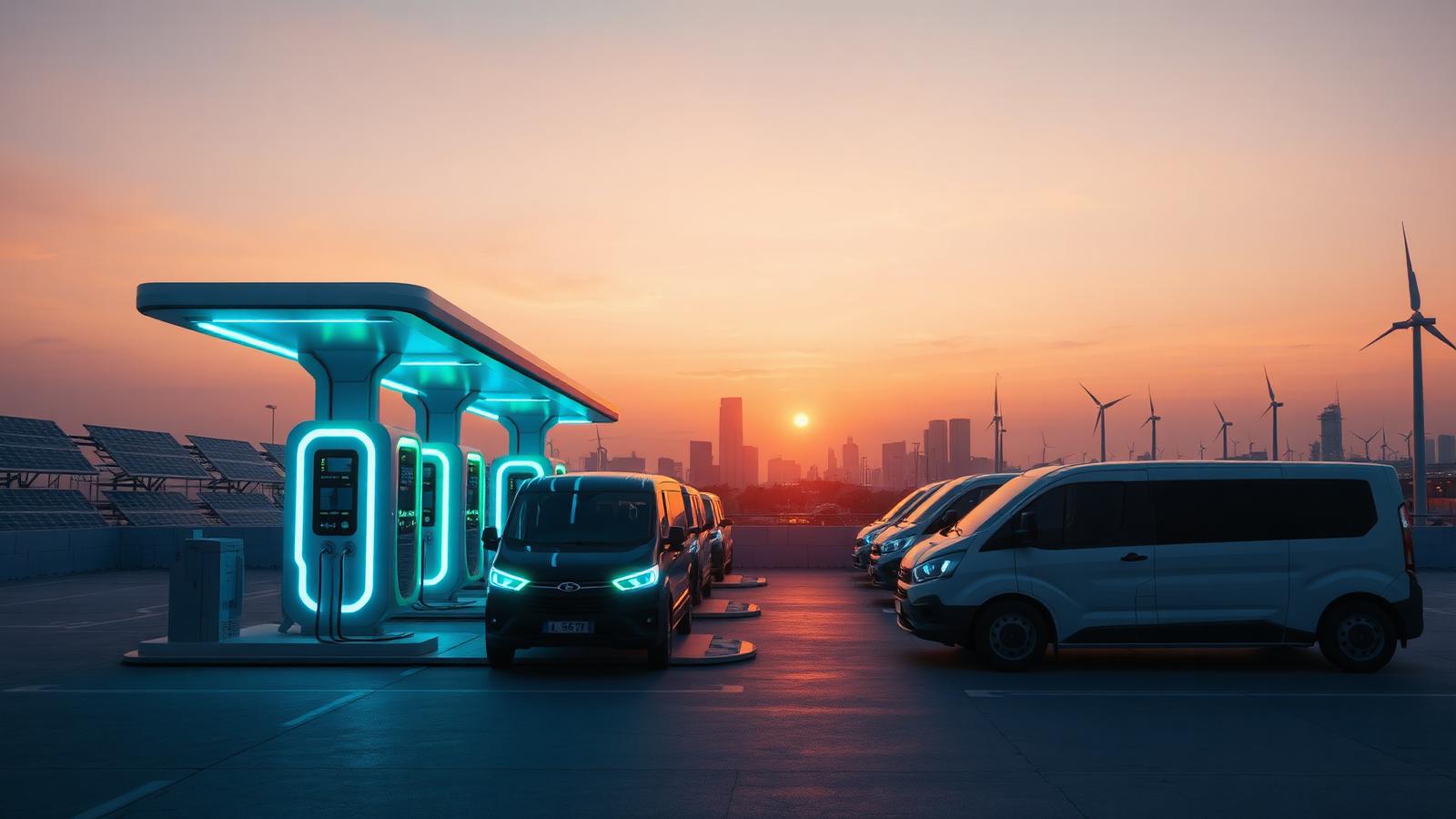
Building Britain's Open Battery Swap Network
Creating the infrastructure, standards and partnerships needed to make 48V electric mobility practical, scalable and commercially viable across the UK.
Charging is the bottleneck for lightweight electric mobility.
Lightweight electric vehicles are the fastest-growing segment of urban mobility, but charging remains one of the biggest barriers to adoption. The UK currently has no open battery swapping infrastructure for this class of vehicle.
OpenSwap 48 will build the open ecosystem the UK needs.
Standardised, scalable swap hardware for urban and depot deployment.
A shared 48V interface so multiple manufacturers can build to one protocol.
Real-time telemetry, robotics and safety systems in every station.
Booking, routing and battery reservation across public and private fleets.
Continuous state-of-health and passporting for every pack in circulation.
Stations as grid assets — buffering renewables and shaping demand.
Time-shifted, price-aware charging that respects distribution network limits.
On-site solar, wind PPAs and V2G-ready architecture from day one.
Live multi-site demonstrator in Greater Manchester before national scale.
KIMIA
KIMIA develops innovative 48V vehicles for UK urban and logistics use.
OpenSwap 48
OpenSwap 48 develops the swap infrastructure and open standards that support KIMIA and future compatible vehicles from multiple manufacturers.
This project is intentionally manufacturer-neutral. Its purpose is to support an open ecosystem, not a proprietary platform — so any UK 48V vehicle programme can plug in on equal terms.
Ten outcomes we are optimising for.
The ideal UK demonstrator city-region.
Greater Manchester combines an innovation ecosystem, advanced manufacturing base, world-class universities, ambitious transport innovation, clean-air targets and dense logistics activity — the exact ingredients a national open battery swap programme needs to prove itself.
A UK coalition, by design.
We are actively seeking founding partners across four groups. All logos and names below are candidates — engagement is by invitation and mutual fit.
Public sector
- Greater Manchester Combined Authority (GMCA)
- Transport for Greater Manchester (TfGM)
- Department for Transport
- Innovate UK
- Advanced Propulsion Centre UK
- Connected Places Catapult
- Energy Systems Catapult
- Office for Zero Emission Vehicles
Academic
- The University of Manchester
- Manchester Metropolitan University
- The University of Salford
- University of Warwick (WMG)
- University of Leeds
Industrial
- EG Group (Euro Garages)
- National Grid Electricity Distribution
- Electricity North West
- Hitachi Energy
- ABB
- Siemens
- Schneider Electric
- Battery manufacturers
- Battery management specialists
- Robotics companies
Fleet operators
- Royal Mail
- Amazon Logistics
- DHL
- FedEx
- DPD
- Local authority fleets
- Utilities
- Emergency services
- Airport operators
Where the first stations could land.
Candidate demonstration sites across Greater Manchester and its logistics corridors. Final selection will be agreed with GMCA, TfGM, energy partners and launch fleet customers.
The technical surface area.
Ten routes to durable revenue.
From feasibility to a national open network.
- Stage 1ActiveFeasibility
Technical, commercial and grid feasibility for open 48V battery swap in the UK, anchored on a Greater Manchester demonstrator.
- Stage 2UpcomingConsortium formation
Named UK consortium of energy, transport, manufacturing, academic and public sector partners with signed heads of terms.
- Stage 3UpcomingPilot design
Detailed engineering of the modular swap station, open interface standard, and fleet operations software.
- Stage 4UpcomingPrototype swap station
First working prototype station commissioned with a fleet partner for supervised operation.
- Stage 5UpcomingGreater Manchester demonstrator
Live multi-site demonstrator across Greater Manchester serving public and private fleets.
- Stage 6UpcomingRegional rollout
Scale to further UK city-regions on the demonstrated standard, with a licensable operating model.
- Stage 7UpcomingNational open network
National open battery swap network supporting multiple manufacturers and fleet operators under a common UK standard.
Help lead a working group.
These are the senior working-group leads we need in place to open the feasibility phase. If one is you — or someone in your network — we want to hear from you.
Lead the consortium, own the feasibility bid and the overall delivery plan through to Greater Manchester demonstrator.
Own the open 48V battery interface standard, working across manufacturers, academia and regulators.
Design grid connection, on-site storage and V2G / flexibility strategy with DNOs and energy partners.
Aggregate public and private fleet demand, define service SLAs and commercial contracts.
Own relationships with GMCA, TfGM, DfT, OZEV, Innovate UK and APC; lead grant writing.
Design the fleet management, station telemetry and battery-passport software stack.
Own battery second-life, recycling and passporting to keep the programme circular from day one.
Consortium storytelling, partner recruitment, and public / press strategy.
- 7/20/2026OpenSwap 48 programme page launched
The public programme page for OpenSwap 48 is live: an open, manufacturer-neutral UK battery swap infrastructure programme designed to complement KIMIA and other 48V vehicle programmes. Feasibility scope, consortium map, working-group roles and Greater Manchester demonstrator plan are now published. Next: named partner conversations with GMCA, TfGM, Innovate UK, APC and DNO partners, and formation of the feasibility bid team.
Help build the future of urban electric mobility.
Whether you are an energy company, vehicle manufacturer, university, investor, transport authority, battery specialist or technology innovator, we invite you to help create the UK's first open battery swap ecosystem.
- Advanced Propulsion Centre UK (APC)Public sector - programme funder
Programme funder and technical partner for UK propulsion and battery innovation.
- Office for Zero Emission Vehicles (OZEV)Public sector - policy
Policy and standards partner for zero-emission vehicle infrastructure.
- Connected Places CatapultInnovation catapult
Urban mobility and place-based innovation partner.
- Energy Systems CatapultInnovation catapult
Grid, energy systems and flexibility partner for smart charging and V2G integration.
- National Grid Electricity DistributionEnergy - distribution
Grid connection and distribution partner for swap station siting.
- Electricity North WestEnergy - regional DNO
Regional distribution network operator for the Greater Manchester demonstrator.
- The University of ManchesterAcademic - research lead
Battery, energy systems and urban mobility research partner.
- Warwick Manufacturing Group (WMG)Academic - battery R&D
Battery systems, standards and manufacturing R&D partner.
- Royal MailFleet launch customer
Anchor postal / last-mile fleet customer for the demonstrator.
- EG GroupForecourt / siting partner
Forecourt operator partner for future public-facing swap sites.
- KIMIA ProgrammeVehicle programme - interoperability
Partner UK 48V vehicle programme; OpenSwap 48 is manufacturer-neutral and complements KIMIA rather than being tied to it.
- Greater Manchester Combined Authority (GMCA)Public sector - demonstrator sponsor
Anchor city-region sponsor for the UK demonstrator, aligning with clean air, decarbonisation and industrial strategy priorities.
- Transport for Greater Manchester (TfGM)Public sector - transport authority
Transport authority partner for pilot site selection, fleet integration and public-sector demand aggregation.
- Innovate UKPublic sector - innovation funder
Primary UK innovation funding partner for the feasibility and demonstrator phases.