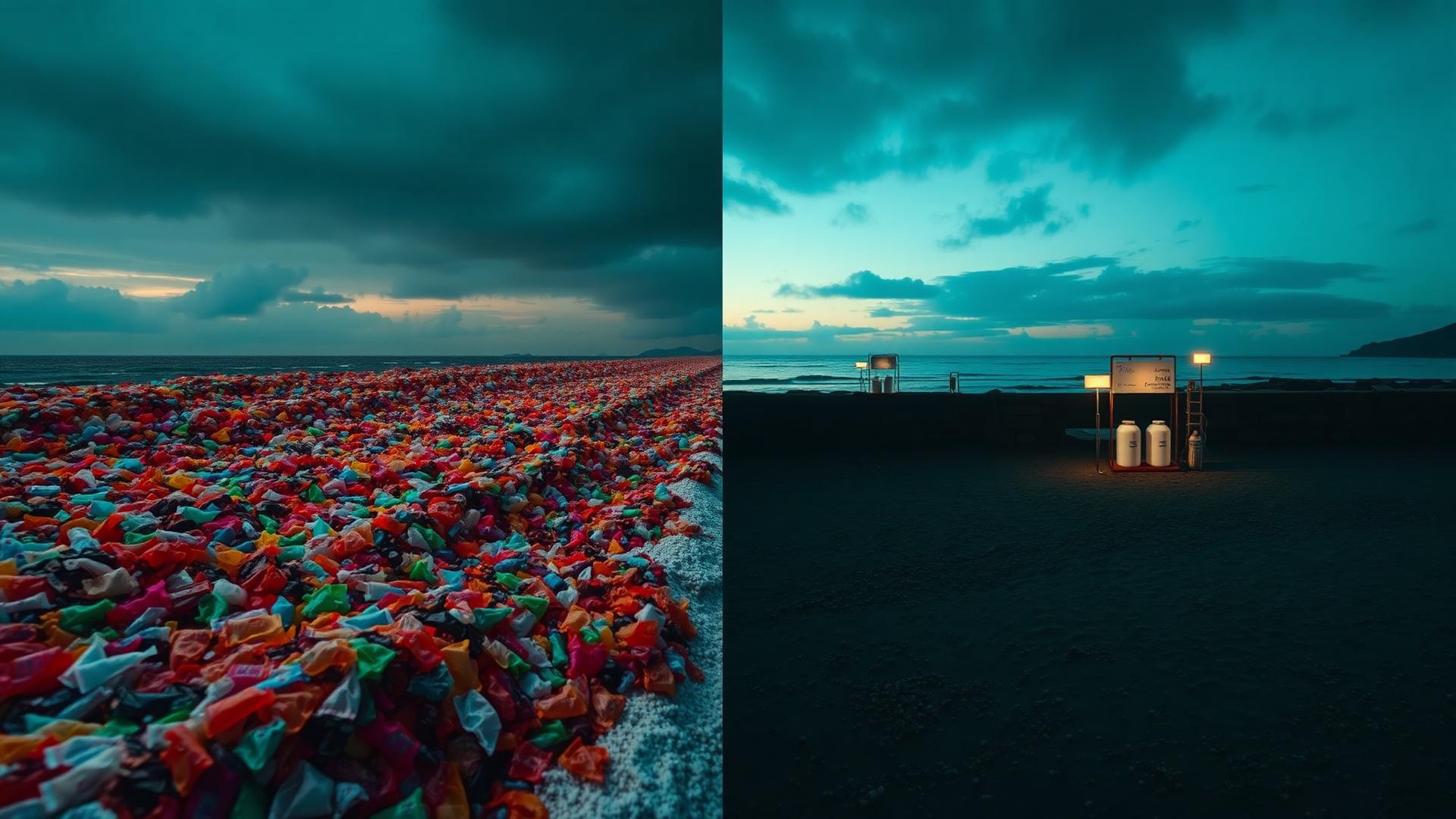
The Global Sachet Exit Challenge
Replacing single-use toiletry sachets with affordable, scalable, circular delivery systems.
- Stages
- 0/7
- Stakeholders
- 0/0
- Open roles
- 0
- Updates
- 0
Snowball roadmap
0 of 7 stages complete
- 01
Idea Launch Pad
activePressure-test the proposition: replace the affordability, convenience, hygiene and distribution advantages of single-use sachets without creating billions of unrecyclable, low-value waste items. WEDGE A pre-competitive, UK-anchored global consortium running a five-track sachet replacement portfolio in parallel - refill & micro-retail, waterless personal care, paper-based barrier-coated single-dose, mono-material PE/PP recyclable sachet, and water-soluble/edible dosing - backed by a first head-to-head pilot in one urban region of Indonesia or the Philippines replacing 10 million shampoo sachets. VISION INTERROGATION - Founder thesis: the answer is a portfolio, not one magic material. Advanced recycling (CreaSolv, VersoVita, PureCycle) is a backstop for legacy waste, not the hero. - Non-negotiables: the winning solution must beat the sachet on affordability, convenience, trust, hygiene and scalability - not just recyclability. - Success definition: open specifications + FMCG procurement commitments at scale, not a PR moment. STAKEHOLDER-READY BRIEF - One-page concept brief: 855B sachets/yr → 1.3T by 2027; EMF warning of 20T flexible items into oceans over 15 years; five-track portfolio; UK KTP route. - Long-form narrative: full consortium thesis, four workstreams, Duo Plastics + Royce SMI Hub manufacturing/materials backbone. - Confidential investor / FMCG memo: anchor sponsor ask, pilot economics, IP/open-spec posture. RISK & ASSUMPTION REGISTER - Shampoo sachet ≠ ecommerce mailer: needs surfactant/oil resistance, O2/moisture barrier, seal strength after liquid exposure, humid-climate leak resistance, FFS line compatibility. - Refill economics must beat sachet at the kiosk level, not just at HQ. - Greenwash risk on water-soluble/edible formats - independent wastewater & toxicity proof required. - FMCG procurement pathway must be defined upfront or pilots stall after success. DELIVERABLES - Founder discovery report (complete) - One-page concept brief (complete) - Confidential FMCG/investor memo (complete - investor pitch deck shipped) - Risk and assumption register (complete) OUTCOME The Sachet Exit Challenge is no longer an idea - it is an object the world can react to, with a defensible wedge, a costed pilot, and a UK manufacturing/research spine.
- 02
Stage Showcase
pendingMake the existing weight visible so the next FMCG, materials innovator or research partner arrives to a consortium that already looks inevitable. COMMITMENT AUDIT Convert every conversation, intro and signal into status: interested / committed / contracted. - Manufacturing & prototyping: Duo Plastics (Manchester, ~102 employees) - co-extrusion film, printing, recycled PE pellets, closed-loop recycling, bio-based GreenPE from sugarcane. Positioned as Applied Manufacturing & Flexible Packaging Prototyping Partner. - Research route: Innovate UK KTP (12–36 months, ~£8,500/month, up to 67% grant for SMEs) with University of Manchester / Henry Royce Institute / SMI Hub, with Sheffield Grantham Centre, MMU and CPI/Catapult as supporting options. - Materials innovators long-listed: Xampla (Morro), Aquapak (Hydropol), Notpla (seaweed coatings), SmartSolve, TIPA, Futamura/NatureFlex. - Converter long-list: UFlex, Gualapack, Amcor, Mondi, Huhtamaki, Constantia Flexibles, ProAmpac. - Refill & micro-retail long-list: Siklus Refill (~10% cheaper than packaged in Indonesia), Alner, Koinpack, QYOS, Bopinc, Refillable, mobile-money partners. - FMCG targets: Unilever (1,000+ Indonesia refill stations; Clear mono-material Hanoi trial; CreaSolv), P&G (shampoo bars across H&S, Pantene, Herbal Essences, Aussie; VersoVita/PureCycle), Nestlé, L'Oréal, Colgate, Henkel. - Policy & proof: Ellen MacArthur Foundation, WRAP, CEFLEX, Sustainable Packaging Coalition, waste-picker organisations, LCA specialists, city governments. SHOWCASE ARTEFACTS - Partner-facing showcase site (gated) with five-track portfolio, four workstreams and consortium map. - Credentials deck: founder, Snowball mechanic, UK manufacturing/research spine, pilot scope. - Curated press / quotes file from existing public signals (Unilever Indonesia, P&G bars, Xampla/Aquapak/Notpla coverage). NARRATIVE ANCHORING Position every named partner so they can place themselves inside the story - not bolted on, but originally invited. Manchester framed as the UK-led global manufacturing and materials innovation base. DELIVERABLES - Partner-facing showcase site (gated) - Commitments & credentials deck - Curated coverage & quotes file OUTCOME A consortium that arrives in the room with gravity, not a pitch deck that begs for attention.
- 03
Invite to Ballers
pendingOpen Snowball's network with precision - bring in the strategic operators, anchor sponsor and capital partners whose names unlock the next ten. TIERED TARGET MAP Tier 1 - Anchor FMCG sponsor (one of Unilever, P&G, Nestlé, L'Oréal, Colgate, Henkel). Thesis: each has live sachet exposure across shampoo/conditioner/body wash/detergent in Indonesia, Philippines, India, Nigeria, Bangladesh, Vietnam, plus pre-existing refill or bar pilots to build on. Tier 2 - KTP lead research partner: University of Manchester / Royce SMI Hub (lead), Sheffield Grantham Centre, MMU, CPI/Catapult as alternates. Tier 3 - Materials innovators with the strongest barrier/recyclability story: Xampla, Aquapak, Notpla, SmartSolve. Tier 4 - Refill/micro-retail operator for the pilot region: Siklus or Alner (Indonesia), Koinpack (Philippines). Tier 5 - Waste-sector & policy validators: EMF, WRAP, CEFLEX, local waste-picker organisations. Tier 6 - Capital: blended finance, plastics-action funds, FMCG sustainability venture arms, DFIs for the pilot region. WARM ORCHESTRATION - NDA, anchor-sponsor term sheet, KTP letter of support and pilot MOU drafted before first call. - Intros sequenced so the second name on the list always lands after the first is committed. - Asks per partner: what they contribute (specs / formats / pilot markets / filling-line constraints / MOQ commitments / pilot funding / LCA / consumer research / procurement pathway for FMCG) and what they receive (open spec, pilot data, co-branded outcomes, first-mover procurement option). ONBOARDING RAILS - Every Baller given a defined seat on a named workstream (Refill & Micro-Retail, Waterless Personal Care, Next-Gen Materials, Collection/Policy/Proof). - Visible position in the public dashboard once Stage 5 is live. - Veto: every name on the list is co-approved by the founder before any approach. DELIVERABLES - Tiered partner target map - NDA + anchor sponsor term sheet + KTP letter of support + pilot MOU pack - Sequenced intro plan OUTCOME The right names in the room - one anchor FMCG, one KTP research lead, two-to-three materials innovators, one refill operator, one policy validator and committed pilot capital - inside the shortest possible window.
- 04
Momentum Building
pendingThe point of mass accumulation: the consortium begins to roll on its own. FMCGs, materials innovators and capital begin to chase the project rather than the other way around. COMPOUNDING SIGNALS - KTP & PROTOTYPES - KTP submitted with University of Manchester / Royce SMI Hub on "Scalable recyclable and/or bio-based flexible sachet films for low-cost personal-care products, replacing unrecyclable multilayer foil/plastic laminates." - WP1 benchmark of the current sachet published openly: layers, barrier, seal strength, puncture, shelf life, cost per thousand, filling-line requirements, failure modes. - WP2 three prototype routes built by Duo with research partner: (a) mono-material PE/PP, (b) bio-based PE, (c) paper/fibre with recyclable or repulpable barrier. - WP3 fill-and-abuse testing against real shampoo and body wash: heat, humidity, compression, drop, shelf life, leakage, odour transfer, print/ink, seal failure. PIPELINE TRIAGE - Inbound interest from secondary FMCGs, converters and NGOs scored within 48 hours against the five-track portfolio. - Founder protected from drift: no new tracks added unless they beat one of the existing five on cost, scalability or end-of-life proof. - Slots reserved only for partners that compound the pilot (e.g. local retailer chains in Jakarta/Manila, waste-picker cooperatives, city governments). CAPITAL READINESS - Pilot budget locked: prototype builds, abuse testing, in-market refill/bar/sachet trials, independent LCA, consumer research, waste audit. - Anchor sponsor MOQ and pilot-funding commitments signed. - Data room: KTP plan, WP1 benchmark, prototype specs, pilot region selection rationale, LCA methodology, governance and IP/open-spec model. DELIVERABLES - Milestone cadence plan (fortnightly external update, monthly investor/FMCG note, quarterly proof points: WP1 → WP2 → WP3) - Inbound triage framework scoring against the five tracks and four workstreams - Investor- and FMCG-ready data room OUTCOME A consortium with its own gravitational pull: secondary FMCGs, converters, refill operators and capital seek the founder rather than the reverse.
- 05
Marketing & Crowdfunding
pendingTake the Sachet Exit Challenge public - turn the consortium into a movement and unlock blended capital for the head-to-head pilot. PUBLIC NARRATIVE - Headline: 855 billion sachets a year, 1.3 trillion by 2027, 20 trillion flexible items potentially into oceans over 15 years - and a UK-led global consortium with a real plan to replace them. - Story spine: the answer is a portfolio (refill, waterless, paper barrier, mono-material recyclable, soluble dose) - not one magic material - measured head-to-head in one real urban region. - Anti-greenwash posture: independent LCA, wastewater and toxicity proof, open specifications. PUBLIC ASSETS - Public Sachet Exit Challenge site (replaces the gated showcase) with live consortium map, five-track explainer, four workstreams, pilot region rationale, and progress dashboard. - Investor pitch deck (already shipped) re-versioned for public/press. - Founder & partner op-eds in trade press (packaging, FMCG, sustainability) and mainstream outlets in pilot markets. - Short-form video: kiosk refill, shampoo bar, paper sachet, mono-material sachet - side by side. CROWDFUNDING & BLENDED CAPITAL - Public/community crowdfund for the pilot's waste-picker cooperative and consumer research components - visible community ownership of the pilot region's outcome. - Blended capital stack: anchor FMCG pilot funding + Innovate UK KTP grant (up to 67% for SMEs / 50% for large companies) + plastics-action philanthropic capital + DFI co-funding for in-market trial. CAMPAIGN MECHANICS - Open call for additional materials innovators and refill operators to apply into the portfolio against published specs (WP1 benchmark) - widens the funnel without diluting the wedge. - Live counter: shampoo sachets committed to be replaced in the pilot (target: 10 million in one urban region). - Press windows aligned to WP3 abuse-test results and pilot launch. DELIVERABLES - Public Sachet Exit Challenge site - Crowdfund + blended capital stack - PR and content plan with named outlets - Open call for portfolio applicants OUTCOME The consortium is publicly known, fully funded for the first pilot, and pulling new partners through an open call rather than bilateral outreach.
- 06
Project Launch
pendingRun the first head-to-head pilot: replace 10 million single-use shampoo sachets in one urban region of Indonesia or the Philippines, testing five replacement routes side by side. PILOT DESIGN - Market: Jakarta-region (Indonesia) or Metro Manila (Philippines), final choice driven by anchor FMCG distribution and refill-operator footprint. - Product: low-cost shampoo (chosen for sachet dominance, surfactant difficulty, humid-climate stress and consumer-research baselines). - Scale: 10 million sachet equivalents replaced across the pilot region. FIVE ROUTES TESTED IN PARALLEL 1. Shop-based refill (Siklus / Alner / Koinpack stations in warungs / sari-sari stores). 2. Mobile refill (door-to-door dispensers). 3. Shampoo bar / sheet (P&G-style format, locally co-formulated where possible). 4. Paper-based single-dose sachet with barrier coating (Xampla / Aquapak / Notpla / SmartSolve route, prototyped via Duo + Royce SMI Hub). 5. Mono-material PE/PP recyclable sachet (Duo prototype, paired with a kiosk collection incentive and a waste-picker cooperative buy-back). INDEPENDENT MEASUREMENT - Cost per wash vs. incumbent sachet - Repeat purchase rate and consumer satisfaction - Retailer/kiosk margin and willingness to restock - Plastic avoided (tonnes and units) - Leakage risk into local waterways - Humid-climate shelf life and abuse-test performance - Manufacturability at scale (FFS line compatibility, throughput, MOQ) - End-of-life proof (collection rate, recyclability, LCA carbon) GOVERNANCE - Independent LCA partner and wastewater/toxicity lab named upfront. - Waste-picker cooperative paid for collection data, not just labour. - City government and local NGO sign-off on consumer research protocols. DELIVERABLES - Live pilot in one urban region with all five routes running concurrently - Public progress dashboard updated weekly - Independent measurement report at month 3, 6 and 12 - WP4 recyclability & LCA output and WP5 manufacturable FMCG pilot pack OUTCOME A real-world, independently measured comparison of the five routes - with clear evidence of which combination beats the sachet on affordability, convenience, hygiene, scalability and end-of-life proof in that market.
- 07
Follow-up Partnership Strategy
pendingConvert the pilot result into open specifications, FMCG procurement commitments at scale, and a repeatable rollout across the highest-sachet-volume markets. OPEN SPECIFICATIONS - Publish the winning route(s) per use-case as open, royalty-free specifications: mono-material PE/PP sachet film spec, paper-barrier sachet spec, bar/sheet format spec, refill kiosk hardware & hygiene spec, mobile-refill dispenser spec, soluble-dose toxicity & wastewater protocol. - Open WP1 benchmark methodology so any FMCG, converter or city can re-run the comparison locally. FMCG PROCUREMENT COMMITMENTS - Anchor sponsor signs a multi-market procurement commitment against the winning specs (volume + categories + timeline). - Tier-2 FMCGs (the other five of Unilever, P&G, Nestlé, L'Oréal, Colgate, Henkel) invited into a pre-competitive procurement pool with shared MOQs. - Converters (Duo, UFlex, Gualapack, Amcor, Mondi, Huhtamaki, Constantia Flexibles, ProAmpac) onboarded to produce against the open specs without IP friction. GEOGRAPHIC ROLLOUT - Replicate the pilot model in the remaining priority markets: Indonesia, Philippines, India, Nigeria, Bangladesh, Vietnam - each with a local refill operator, a local waste-sector partner and a city government counterpart. - Adapt the route mix per market (e.g. refill-dominant where micro-retail is dense; mono-material + collection incentive where flexible-film recycling exists; bars/sheets where logistics suit). POLICY & STANDARDS - Feed open specs and pilot data into EMF, WRAP, CEFLEX, SPC and national EPR schemes. - Support city-level bans / EPR fees on unrecyclable multilayer sachets once a viable alternative is proven locally - never before. PARTNERSHIP STRATEGY ARTEFACTS - Public sachet replacement playbook (per market, per route). - Procurement consortium charter. - Royalty-free spec library. - Annual independent impact report (units replaced, plastic avoided, leakage reduction, refill operator margin, waste-picker income). OUTCOME A pre-competitive global system where any FMCG, converter, city or refill operator can pick up open specs and replicate the winning routes at speed - turning a single 10-million-sachet pilot into a credible path to retiring the single-use sachet category.
About
The Global Sachet Exit Challenge is a pre-competitive, world-scale Snowball convening FMCG brands, material scientists, packaging converters, refill startups, retailers, waste-sector experts and governments to identify, test and scale the next generation of sachet alternatives. THE REAL PROBLEM The problem is not simply "how do we recycle sachets?" - it is: how do we replace the affordability, convenience, hygiene and distribution advantages of sachets without creating billions of unrecyclable, low-value waste items? Widely cited campaigner figures put global sachet sales at around 855 billion per year, with projections as high as 1.3 trillion by 2027. The Ellen MacArthur Foundation warns that, without tackling flexible packaging such as sachets, wrappers and pouches, more than 20 trillion flexible items could enter the ocean over the next 15 years. THE THESIS The most realistic answer is a portfolio, not one magic material. Snowball will run a five-track challenge in parallel: 1. Refill and reuse through local shops, kiosks, mobile refill and smart dispensers - replaces the sachet business model, not just the material. (Unilever has 1,000+ refill stations in Indonesia; Siklus Refill prices ~10% cheaper than packaged products.) 2. Solid, concentrated or waterless product formats - shampoo bars, conditioner bars, body wash sheets, toothpaste tablets, dilute-at-home concentrates. (P&G ships shampoo bars for Head & Shoulders, Pantene, Herbal Essences, Aussie in paper packs.) 3. Paper-based flexible sachets with plastic-free barrier coatings - Xampla Morro, Aquapak Hydropol, Notpla seaweed coatings. Strong candidate for unavoidable single-dose use in leakage-prone markets. 4. Mono-material PE/PP recyclable sachets - Unilever has trialled this for Clear shampoo in Hanoi. Best where collection and flexible-film recycling already exist. 5. Water-soluble / compostable / edible dose packaging - SmartSolve pouch stock for dry products, pods, hotels. Must avoid greenwash with independent wastewater and toxicity proof. 6. Advanced recycling of existing multilayer sachets (Unilever CreaSolv, P&G VersoVita / PureCycle) - a backstop for legacy waste, not the hero. THE WINNING SOLUTION MUST BEAT THE SACHET ON AFFORDABILITY, CONVENIENCE, TRUST, HYGIENE AND SCALABILITY - WHILE ELIMINATING UNRECYCLABLE WASTE. FOUR WORKSTREAMS 1. Refill and micro-retail systems - Siklus, QYOS, Alner, Koinpack, Bopinc, Refillable, informal waste-sector orgs, mobile money providers. Target: make refill cheaper and more profitable than sachets for local shops. 2. Waterless personal care - small cosmetic formulators, shampoo bar makers, surfactant chemists, university formulation labs. Target: sachet-priced shampoo experience without a liquid sachet. 3. Next-generation materials - Xampla, Aquapak, Notpla, SmartSolve, TIPA, Futamura/NatureFlex, UFlex, Gualapack, Amcor, Mondi, Huhtamaki, Constantia Flexibles, ProAmpac and specialist coating labs. 4. Collection, policy and proof - Ellen MacArthur Foundation, WRAP, CEFLEX, Sustainable Packaging Coalition, local NGOs, waste picker organisations, LCA specialists, universities and city governments. WHAT FMCG BRANDS MUST CONTRIBUTE Real sachet formats and performance specs; target categories (shampoo, conditioner, body wash, detergent); pilot markets (Indonesia, Philippines, India, Nigeria, Bangladesh, Vietnam); filling-line constraints; minimum order commitments for winning pilots; field-trial funding; independent LCA and social-impact measurement; consumer research data; and a clear procurement pathway if a solution works. UK MANUFACTURING & PROTOTYPING - DUO PLASTICS (MANCHESTER) Duo (East Manchester, ~102 employees) consults, innovates, manufactures, recycles and distributes flexible packaging - co-extrusion/film, printing, recycled PE pellets, closed-loop recycling, and bio-based GreenPE from sugarcane. Positioned inside the consortium as Applied Manufacturing & Flexible Packaging Prototyping Partner - bridging academic materials research and FMCG-scale manufacturability. Where Duo adds value: mono-material PE/PP sachet prototypes; bio-based PE structures; PCR/recycled-content flexible trials; film extrusion and sealability testing; brand-ready samples Unilever/P&G can hold, fill and abuse-test. Caveat: a shampoo sachet is far harder than an ecommerce mailing bag - it needs surfactant resistance, fragrance/oil resistance, oxygen and moisture barrier, seal strength after liquid exposure, hot/cold fill compatibility, humid-climate leak resistance, regulatory cosmetic-contact suitability and high-speed FFS compatibility. Duo should be paired with the right research partner, not asked to solve it alone. PROPOSED UK KTP (KNOWLEDGE TRANSFER PARTNERSHIP) "Development of scalable recyclable and/or bio-based flexible sachet films for low-cost personal-care products, replacing unrecyclable multilayer foil/plastic laminates." Innovate UK KTPs run 12–36 months at ~£8,500/month, with grant up to 67% for SMEs and 50% for large companies. Ideal research partners: University of Manchester / Henry Royce Institute / Sustainable Materials Innovation Hub (SMI Hub); University of Sheffield / Grantham Centre; Manchester Metropolitan University; CPI / Catapult network. KTP WORK PACKAGES WP1 Benchmark the current sachet - layers, barrier, seal strength, puncture, shelf life, cost per thousand, filling-line requirements, failure modes. WP2 Develop 3 prototype routes - (a) mono-material PE/PP recyclable sachet; (b) bio-based PE sachet; (c) paper/fibre-based sachet with recyclable or repulpable barrier coating. WP3 Fill and abuse-test against real shampoo/body wash - heat, humidity, compression, drop, shelf life, leakage, odour transfer, print/ink behaviour, seal failure. WP4 Recyclability and LCA - compatibility with UK and target-market waste systems, carbon comparison, leakage risk, end-of-life pathway, collection economics. WP5 FMCG pilot pack - manufacturable prototypes, costed route to scale, circularity assessment, pilot proposal for one market. FIRST PILOT Market: Indonesia or Philippines. Product: low-cost shampoo. Target: replace 10 million shampoo sachets in one urban region. Test side by side: (1) shop-based refill, (2) mobile refill, (3) shampoo bar/sheet, (4) paper-based single-dose sachet, (5) mono-material sachet with collection incentive. Success metrics: cost per wash vs sachet; repeat purchase; retailer margin; plastic avoided; leakage risk; consumer satisfaction; humid-climate shelf life; manufacturability at scale; end-of-life proof. THE CONSORTIUM - Duo Plastics - film/conversion/prototyping/manufacturing reality - University of Manchester / Royce SMI Hub - materials science, testing, recyclability, LCA - Xampla / Aquapak / Notpla / SmartSolve - novel barrier coatings and materials - Unilever, P&G, Nestlé, L'Oréal, Colgate, Henkel - product specs, filling constraints, target costs, pilot markets - Waste/recycling partners - proof of end-of-life claims - Snowball - challenge platform, stakeholder recruitment, public dashboard, pilot coordination A serious UK-led global sachet replacement consortium, with Manchester as a strong manufacturing and materials innovation base.
Project brief
- Problem
Around 855 billion single-use sachets are sold globally each year (projected up to 1.3 trillion by 2027) for shampoo, hygiene and household products. The multilayer foil/plastic laminates are almost impossible to recycle at scale, individually too small and contaminated to be worth collecting, and they leak into rivers and oceans in vast volumes. Without intervention, the Ellen MacArthur Foundation warns more than 20 trillion flexible packaging items could enter the ocean over the next 15 years. But sachets exist for a reason: low-income consumers need to buy 10p/20p doses of shampoo, toothpaste or detergent. Any replacement must beat the sachet on affordability, convenience, trust, hygiene and scalability - not just on recyclability.
- Audience
Global FMCG brands (Unilever, P&G, Nestlé, L'Oréal, Colgate, Henkel); flexible-packaging converters and material innovators (Duo Plastics, Xampla, Aquapak, Notpla, SmartSolve, Amcor, Mondi, Huhtamaki); refill and micro-retail startups (Siklus, Alner, Koinpack, QYOS); universities and research institutes (University of Manchester, Royce SMI Hub, Sheffield Grantham Centre, CPI/Catapult); waste-sector and waste-picker organisations; NGOs and policy bodies (Ellen MacArthur Foundation, WRAP, CEFLEX, SPC); city governments in Indonesia, Philippines, India, Nigeria, Bangladesh and Vietnam; and ultimately the billions of consumers in low-income urban and rural markets who currently rely on sachets.
- Progress so far
idea-launch-pad - Snowball thesis and five-track portfolio defined. UK manufacturing and prototyping partner identified (Duo Plastics, Manchester) with a proposed Innovate UK KTP route through the University of Manchester / Royce SMI Hub. Consortium long-list assembled across FMCG, materials innovators, refill startups, recyclers and policy bodies. First pilot scoped (Indonesia or Philippines, low-cost shampoo, 10 million sachets replaced in one urban region) with five replacement routes to test side by side. Now recruiting anchor FMCG sponsor and KTP research partner.
- Goals & timeline
Stand up a pre-competitive global consortium and run a head-to-head pilot in one urban region (Indonesia or Philippines) that replaces 10 million single-use shampoo sachets across five replacement routes - refill (shop-based and mobile), waterless (bar/sheet), paper-based single-dose, and mono-material recyclable sachet with collection incentive - with independently measured cost per wash, retailer margin, plastic avoided, leakage risk, humid-climate shelf life, manufacturability at scale and end-of-life proof. Use the results to publish open specifications and unlock FMCG procurement commitments at scale.
- Resources needed
Anchor FMCG sponsor (Unilever or P&G) committing real product specs, filling-line access, pilot market and procurement pathway. UK Innovate UK KTP funding (~£8,500/month, 12–36 months) with University of Manchester / Royce SMI Hub. Barrier-coating partners (Xampla, Aquapak, Notpla, SmartSolve). In-country refill operators (Siklus, Alner, Koinpack). Independent LCA and social-impact measurement. Field-trial funding for the pilot region. Waste-picker and collection partners. Policy and standards input from Ellen MacArthur Foundation, WRAP and CEFLEX. Snowball convening, public dashboard and pilot coordination.
- Existing stakeholders
Identified and being approached: Duo Plastics (Manchester) as applied manufacturing/prototyping partner; University of Manchester / Henry Royce Institute / Sustainable Materials Innovation Hub as research partner; Xampla, Aquapak, Notpla, SmartSolve as barrier-coating innovators; Siklus, Alner, Koinpack, QYOS as refill operators; Unilever and P&G as FMCG anchors (both have public commitments and existing pilots - Unilever's 1,000+ Indonesian refill stations and CreaSolv plant, P&G's shampoo bars and VersoVita/PureCycle recycling); Ellen MacArthur Foundation, WRAP, CEFLEX and SPC for policy, standards and LCA credibility.
Project owner

Join this project
Snowball projects are built by a coalition of contributors. Choose the role that fits how you'd help - register or request to join in seconds.
Supplier
Deliver paid services to the project - design, dev, branding, marketing, legal, finance or fractional execs. Get matched to briefs that fit your specialism.
Founder
Join as a co-founder or founding team member. Take a craft-shaped role (product, engineering, growth, ops) with equity and help drive the project from idea to launch.
Mentor
Give a few hours a month of frank, sector-specific advice. Help the founder unblock decisions on fundraising, GTM, hiring or product.
Research Collaboration
Bring R&D, technical testing, data analysis or applied research capability. Co-design experiments, validate assumptions and publish outcomes with the project.
Stakeholder
Plug in as an ecosystem partner - council, network, accelerator or charity. Signpost the project, open doors in your patch, or offer grants and workspace.
Funder
Back the project with capital - angel cheque, syndicate, grant or institutional ticket. Get a momentum-scored view of progress and direct line to the founder.
Stakeholders
None listed yet.
Open roles
No open roles right now.